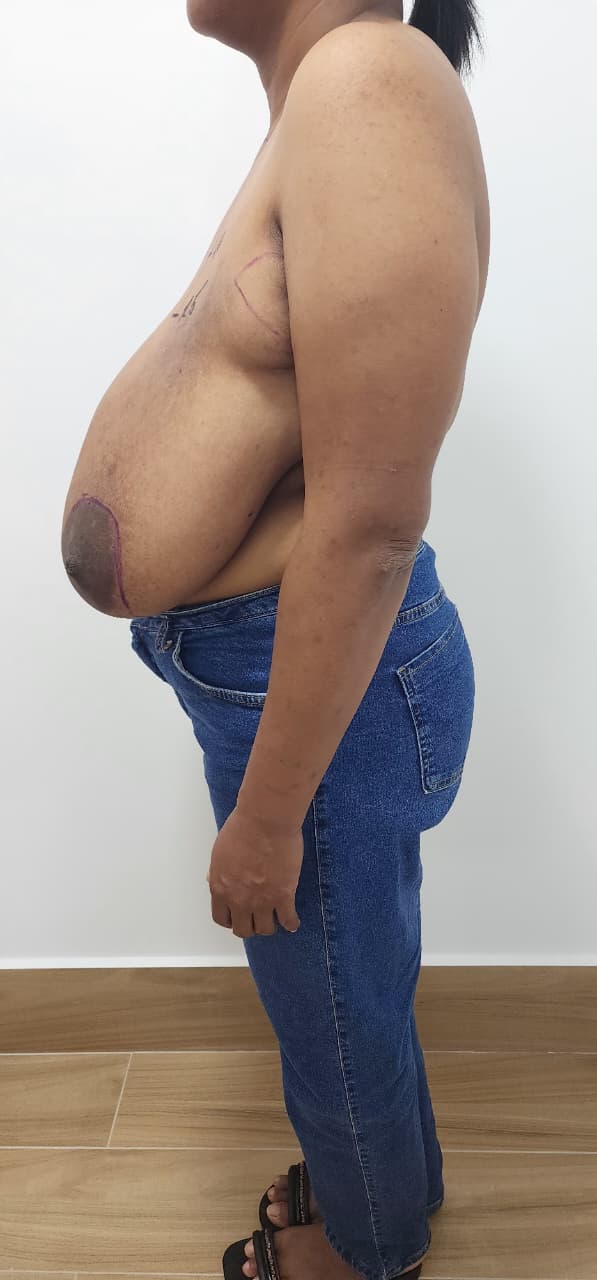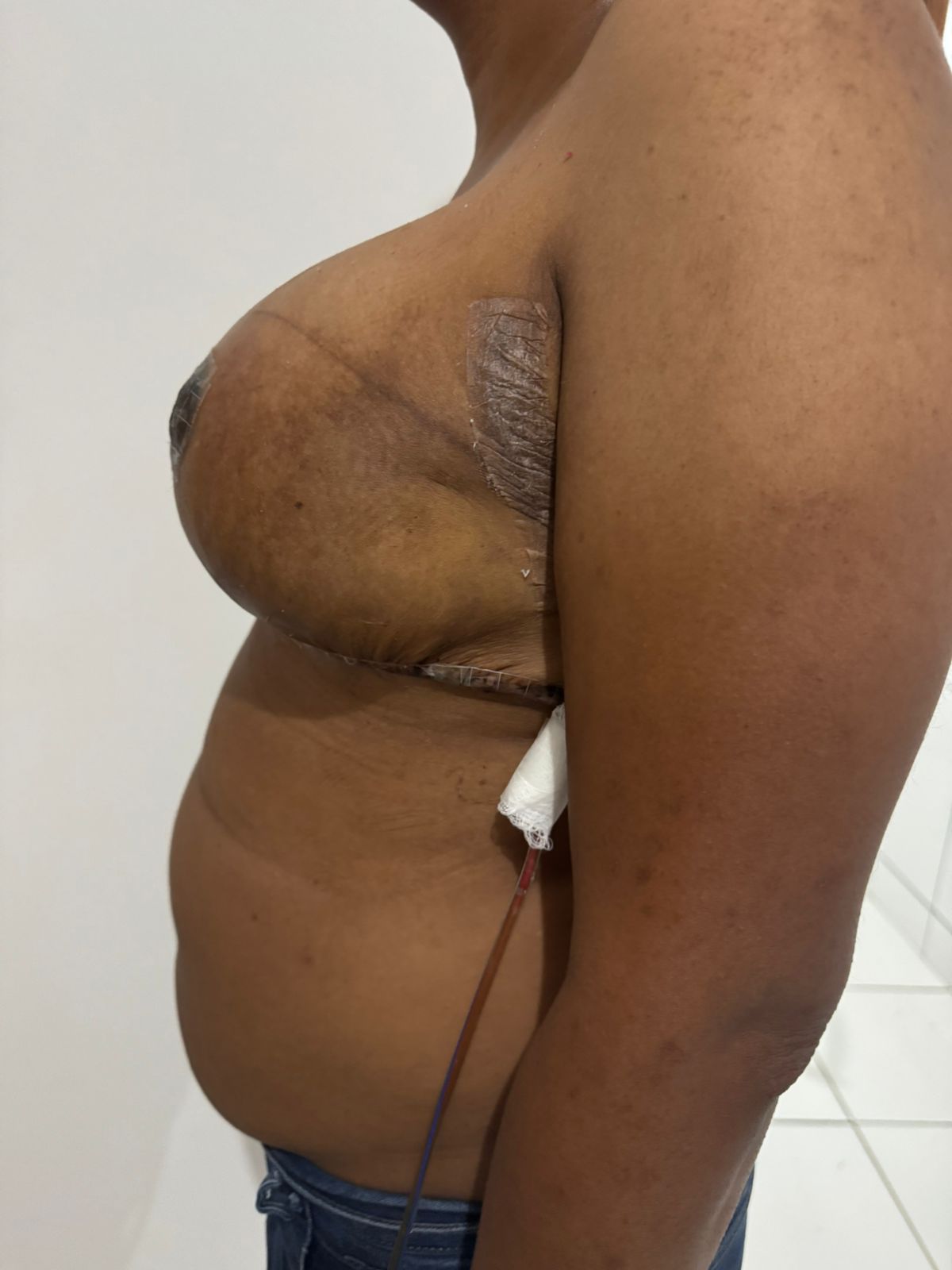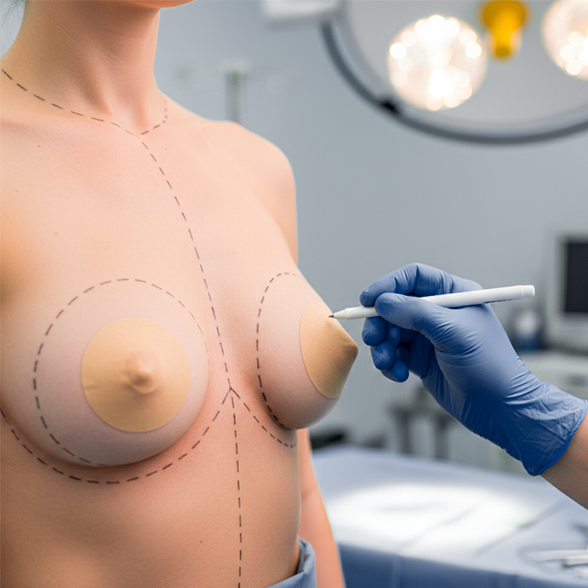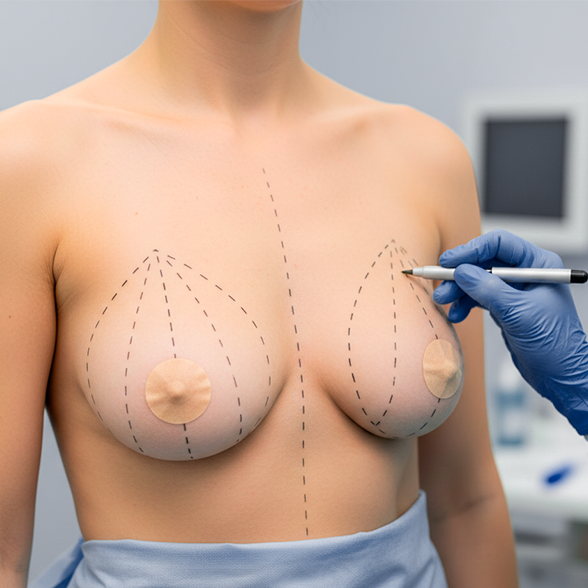
In this image, it is possible to observe the excess breast volume and the sharp drop in tissue. This condition often results in chronic physical discomfort, such as back and shoulder pain, as well as limitations in physical activity. The objective here was to plan a substantial reduction to restore harmony to the trunk.
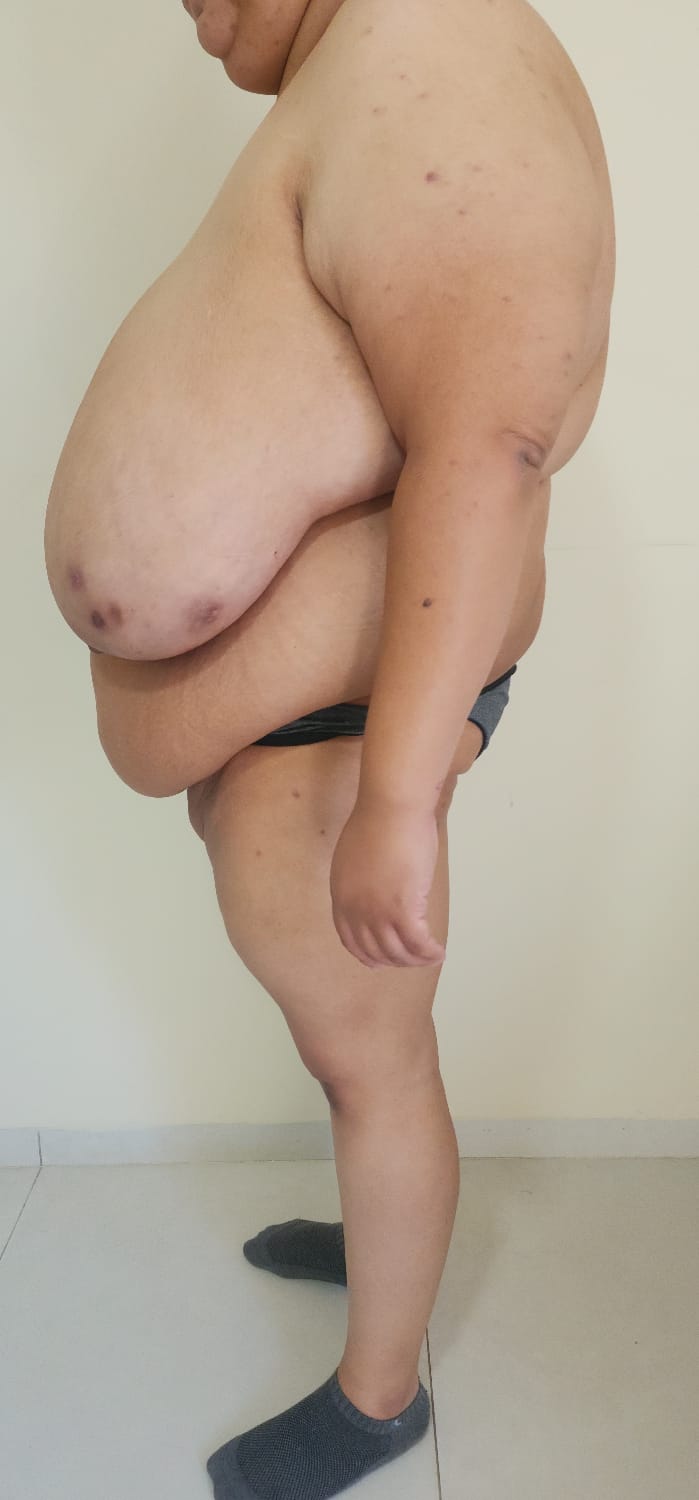
In this profile image, you can see a very pronounced breast volume that goes beyond the abdominal line, characterizing gigantomastia. This condition is usually accompanied by severe complaints of chronic pain in the cervical and lumbar region, in addition to dermatitis (skin irritation) in the inframammary fold due to weight and constant friction. The surgical goal was to remove a large amount of tissue to provide immediate physical relief.
Sensitive Content Warning
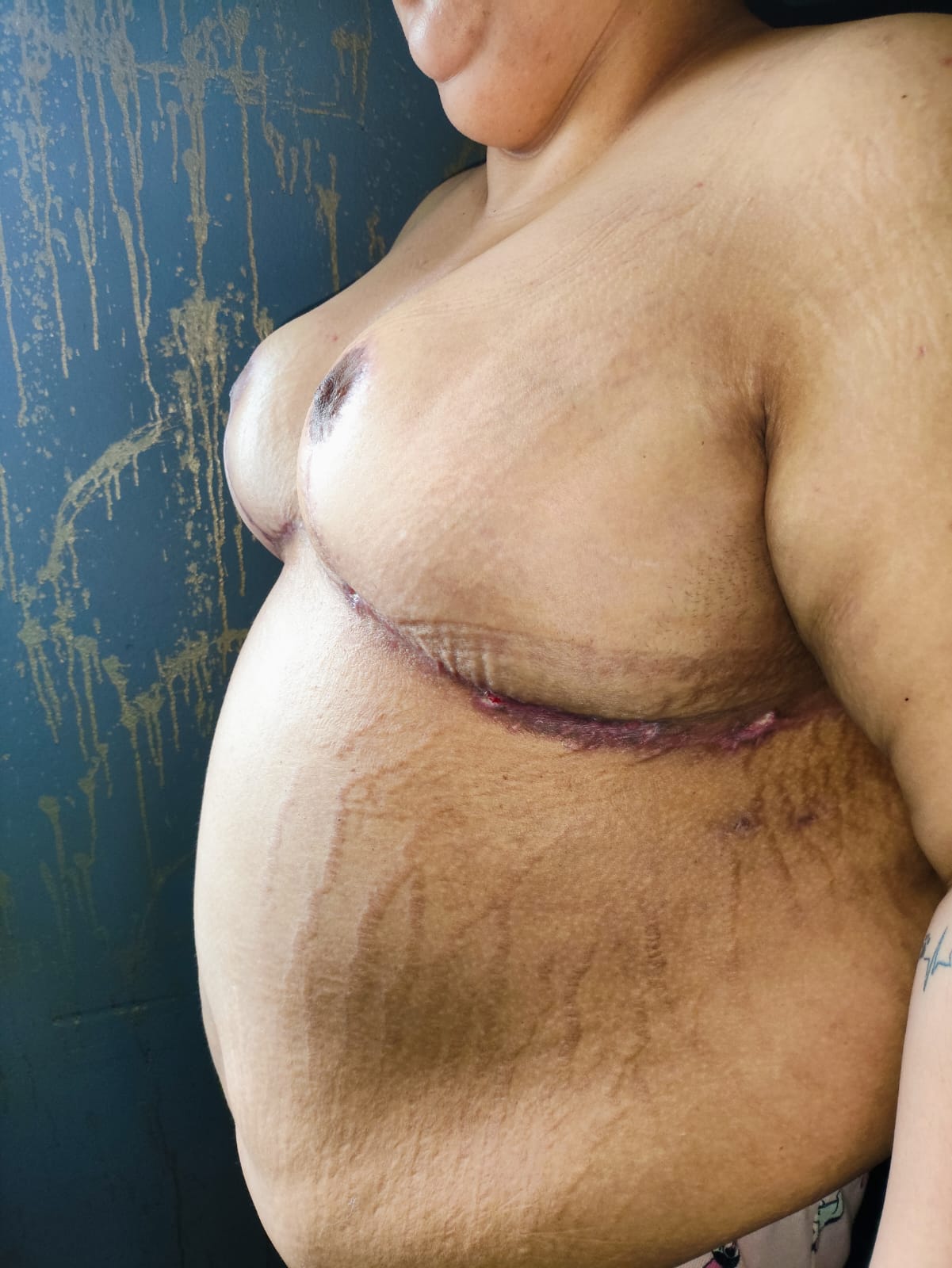
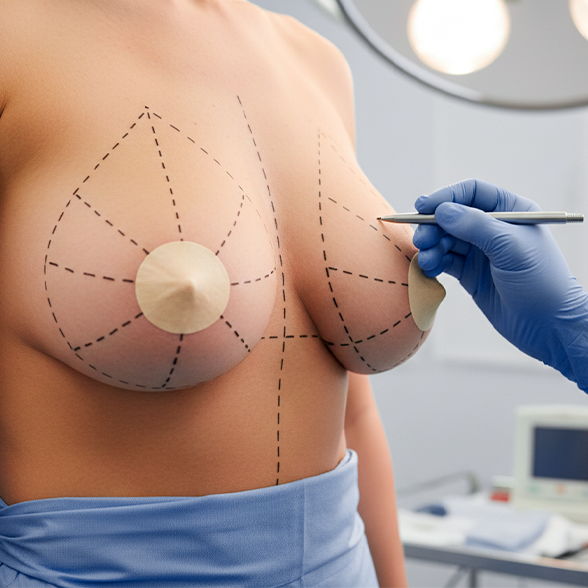
The big difference is the absence of a vertical scar. While the traditional technique leaves the famous "inverted T", Passot Revisited allows the final scar to be strategically hidden only in the horizontal crease (the fold below the breast), providing a much cleaner and more discreet contour.
To guarantee safety and aesthetic results, a mechanism called "Buttonhole" is used. This method allows you to remove excess tissue and fat while repositioning the areola precisely, maintaining vascularity and harmony with the new shape of the breast.
In addition to aesthetic gains, breast reduction solves functional problems caused by excess weight (hypertrophy). Patients often report the end of chronic back, shoulder and neck pain, as well as greater freedom to practice physical activities and ease in choosing clothes that previously did not fit properly.
The technique is recommended for women who have breast hypertrophy or asymmetries and who seek a sophisticated and lasting result. It is ideal for those who want lighter, firmer and more proportional breasts, but prioritize a post-operative period with as few visible marks as possible.